RECOGNITION AND ASSESSMENT | TD SPOTLIGHT
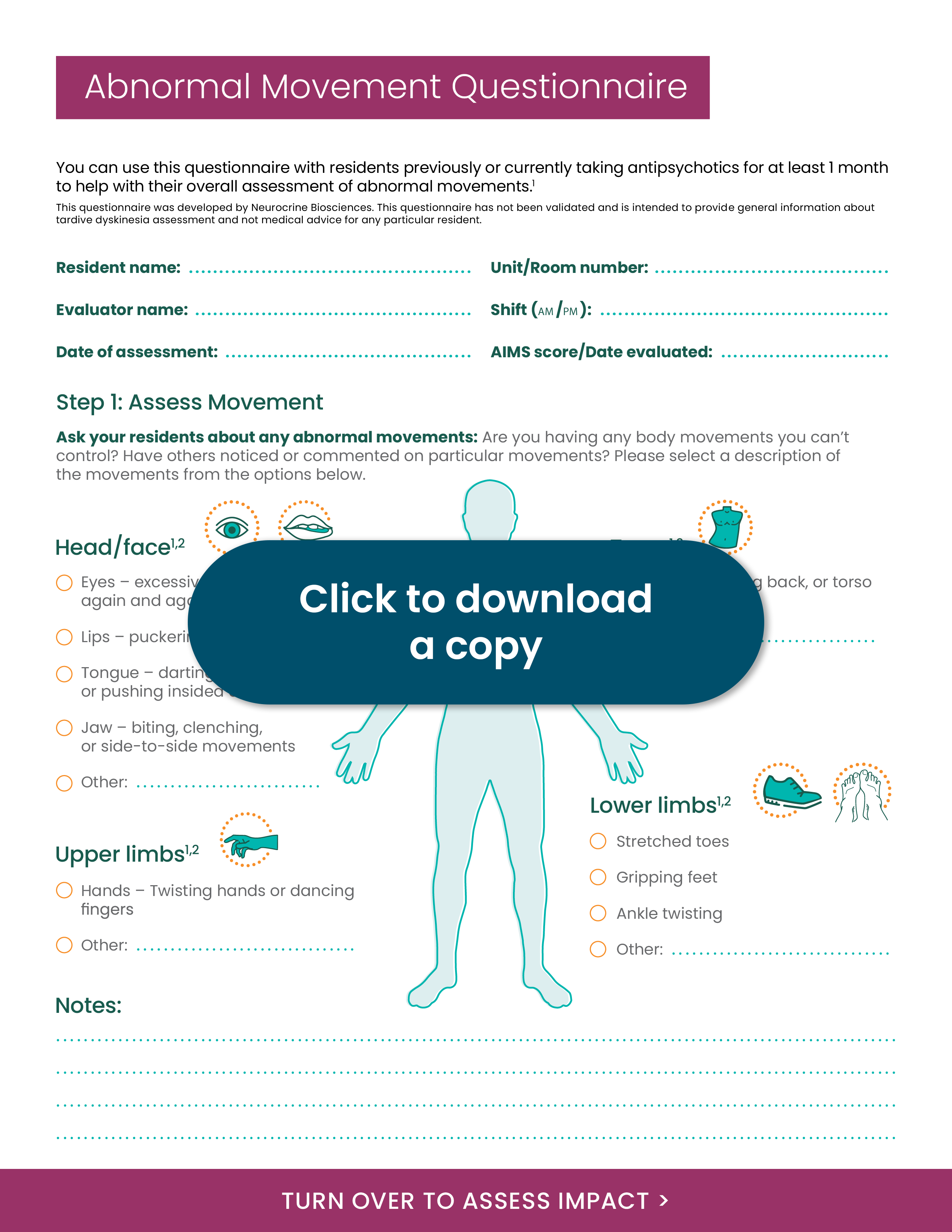
Utilize this questionnaire to support the assessment of abnormal involuntary movements across multiple regions of the body, as well as any physical, social, and emotional impact on your patients.
Up Next
Anticholinergics in the Management of DRBA-Induced Movement Disorders
Review the role of anticholinergics across common dopamine-receptor-blocking agent (DRBA)-induced movement disorders, including key pathophysiologic differences, appropriate use in conditions such as drug-induced parkinsonism and dystonia, and the inappropriate use for the treatment of tardive dyskinesia.
Up Next
The Inappropriate Use of Anticholinergics in Tardive Dyskinesia
Explore why anticholinergics are not recommended for the treatment of tardive dyskinesia (TD), the importance of reducing anticholinergic burden when appropriate, and the key pharmacologic differences among common treatment strategies for TD.
Empty space, drag to resize
Empty space, drag to resize
Empty space, drag to resize
References
1. American Psychiatric Association. Diagnostic and Statistical Manual of Mental Disorders-Text Revision. 5th ed. Arlington, VA: American Psychiatric Association; 2022.
2. Guy W. ECDEU Assessment Manual for Psychopharmacology. Revised 1976. Rockville, MD: National Institute of Mental Health; 1976.
Empty space, drag to resize